South African racing continues to wrestle with a sponsorship model that appears increasingly disconnected from the way modern audiences consume sport. While media consumption has shifted decisively online, many of the sport’s marquee races remain attached to newspaper brands whose relevance and reach are no longer what they once were. The result is a sponsorship landscape that, in some areas, feels rooted in a bygone era rather than aligned with the demands of growing a contemporary racing audience.
The days when newspapers served as the primary gateway between racing and the public have long passed. Traditional print publications have themselves adapted to digital platforms, competing alongside countless online outlets, websites, social media channels and content creators. Yet many race sponsorship arrangements still reflect a period when newspapers held unrivalled influence over public attention.
That raises an important question for the industry: what tangible value do these sponsorships deliver to racing itself? In many cases, newspaper-branded races appear to offer greater promotional benefit to the media companies involved than to the sport. Coverage is often confined to sections of publications that no longer command the audience share they once did, while racing seeks to attract consumers who increasingly engage through mobile devices, tablets and online platforms.
Historic races such as the Daily News 2000, Post Merchants, IOL On Saturday Drill Hall Stakes and Mercury Sprint remain linked to newspaper brands from a single media group, with many of these sponsorship structures largely taking shape in the late 1990s and early 2000s. While those titles carry historical significance, their ability to connect racing with new audiences is increasingly open to debate.
Context matters. There was a time when newspaper sponsorships delivered substantial value because newspapers occupied a dominant position in the media landscape. The Cape Argus Cape Guineas era reflects that traditional model, where print media acted as the primary distribution channel for racing coverage rather than a secondary one.
A clearer picture of modern commercial scale emerges from the Durban July’s evolution through major consumer brand partnerships. The Rothmans Durban July sponsorship ran from 1963 to 2000, making it the longest-running title sponsorship in the race’s history. During that period, the race operated in a pre-digital mass media environment dominated by television, print circulation, and national cultural exposure. While no verified digital audience metrics exist from that era, Rothmans’ positioning as a large-scale consumer tobacco brand meant the race benefited from broad national visibility across mainstream media channels.
The Vodacom Durban July era followed, running from 2002 to 2022 after a transitional year in 2001. This period marked a shift into a fully integrated consumer and digital marketing environment. Importantly, the widely cited reach figures of 3.8 million impressions and 16 million earned media interactions come from a Vodacom Durban July marketing case study conducted around 2018, reflecting campaign activation performance linked to the event rather than a single race day or single-year snapshot.
Those figures highlight a structural difference in sponsorship philosophy. Vodacom did not simply brand the race; it used the Durban July as a lifestyle and digital engagement platform, integrating fashion, entertainment and subscriber-driven activations to extend reach beyond core racing audiences.
“Powerful brands mean brought audiences” becomes the defining distinction when comparing these sponsorship models. Both Rothmans and Vodacom functioned as consumer-facing mass-market brands with established customer ecosystems, effectively importing those audiences into racing. That widened the Durban July beyond its traditional base and reinforced its position as a lifestyle event rather than a closed sporting product.
By contrast, bookmaker-driven sponsorships tend to reinforce existing participation patterns. While they are now central to racing’s financial ecosystem, they largely operate within the sport’s established audience rather than expanding it. The result is a commercial loop where engagement remains strong but structurally concentrated within the same demographic base.
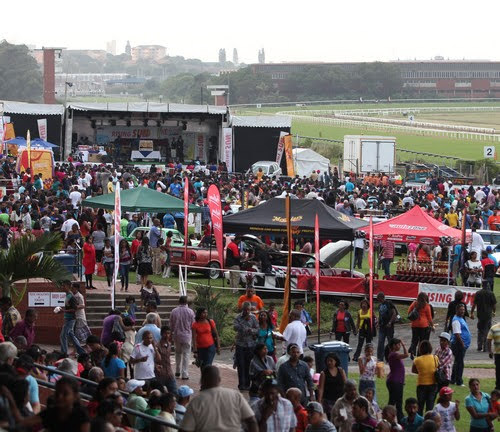
One example of a more community-driven approach emerged through the Rising Sun's involvement with racing in the late 2010s and into the pre-Covid period. By connecting directly with local audiences and encouraging attendance, the initiative demonstrated an alternative model for engagement. Significantly, it succeeded in bringing people to the racecourse rather than simply attaching a brand name to an event. That momentum was lost following the Covid-19 pandemic in 2020, and the audience it helped cultivate was never fully recovered.
The Need for New Thinking
The broader issue extends beyond individual race names. Sponsorship represents one of the sport's most important growth mechanisms, influencing audience development, commercial investment and long-term sustainability. Yet there appears to be limited evidence of significant new commercial partners entering the South African racing ecosystem outside the bookmaker sector.
That reality suggests the industry may need to reassess how sponsorship opportunities are packaged, marketed and sold. Growth-oriented businesses, technology companies, digital brands and community-focused organisations may offer pathways to audiences that traditional sponsorship models no longer reach.
If racing is serious about expanding its footprint and attracting new participants, a more ambitious and contemporary sponsorship strategy may be required. Without it, the industry risks remaining locked in a cycle where historic relationships are maintained but meaningful audience growth remains elusive.
In a marketplace shaped by digital consumption and constant competition for attention, the sponsorship decisions made today will play a major role in determining whether racing grows its audience tomorrow.
|



.jpg)