Horse racing’s struggle to connect with younger fans is no secret. What is becoming clearer, however, is how other global sports have managed to turn that challenge into an opportunity — with Formula 1 offering a compelling blueprint.
That message was front and center on the opening day of the 41st Asian Racing Conference in Riyadh, where storytelling, rather than technology, emerged as a central theme in discussions around fan growth and sustainability.
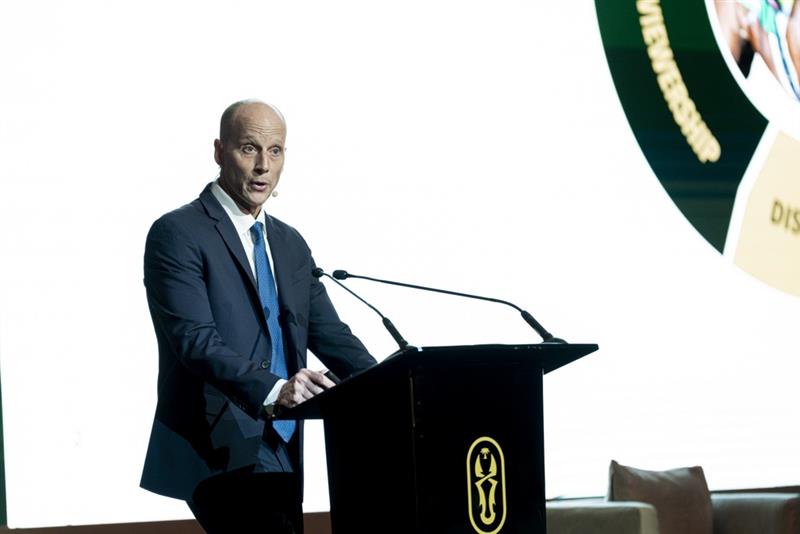
Speaking during the session titled Fan Engagement: Global Broadcasting and Viewership, The Hong Kong Jockey Club’s Executive Director of Sports Business, Casper Stylsvig, pointed to a familiar problem facing racing worldwide: an ageing, male-dominated audience competing for attention in an increasingly crowded entertainment market.
Stylsvig drew parallels with Formula 1’s own recent past. In 2017, F1 was battling declining viewership, an ageing fan base and a reputation for being overly technical and data-driven — all of which negatively impacted broadcast value.
The shift came with a conscious move away from pure information and toward human-centered storytelling, most notably through Netflix’s Drive to Survive series.
“Instead of selling facts, they’re selling emotions. People want to see emotions and they want to see what’s behind the scenes,” Stylsvig said.
He suggested that this emotional connection — rather than an emphasis on data or complexity — is what horse racing must prioritize if it hopes to attract new generations of fans.
The conversation then turned to the power of global collaboration, with Breeders’ Cup Limited Executive Vice-President and Chief Marketing Officer Justin McDonald outlining how the Breeders’ Cup Challenge Series has helped expand international interest in the event.
The “win-and-you’re-in” series now consists of 95 races across 14 countries, with 45 of those staged outside the United States. McDonald described it as one of the sport’s strongest examples of global cooperation, linking major racing festivals worldwide through a shared narrative.
“When you bring the best horses in the world together you create something in front of people,” McDonald said. “That global participation drives interest, and global interest creates opportunities to further engage the fans.”
He added that international participation doesn’t just enhance competition — it fundamentally changes who cares about the event and where that interest originates.
Once interest is established, McDonald noted, engagement becomes the next challenge — and modern engagement looks very different from even five years ago. Fans now expect constant access to content before, during and after race day.
Research shows that around 90 percent of Gen Z sports fans consume content via social media, making non-live content essential rather than supplementary. In response, the Breeders’ Cup now operates with a year-round content strategy, producing digital material well beyond the live event itself.
The organization has also restructured its media rights approach, bundling global broadcast rights to simplify acquisition for broadcasters, while separately carving out live streaming rights. This has allowed fans to watch Breeders’ Cup races live on platforms such as YouTube, Facebook and X, a move McDonald described as a powerful discovery and engagement tool, particularly for international audiences.
The session concluded with insights from outside traditional sport. Rawan AlButairi, Chief Executive Officer of the Saudi Esports Federation, spoke about the rapid growth of Esports in the Kingdom since 2017 and the central role of storytelling in that expansion.
“Numbers are important, but storytelling and investing in content creation is absolutely fundamental,” she said.
AlButairi emphasized that younger fans often discover sports online long before watching them live, meaning broadcasting is no longer the starting point of the fan journey — just one part of it.
The message across the panel was consistent: if horse racing wants to grow its audience, it must stop leading with information and start leading with emotion. Data will always matter, but stories are what make fans care.
|



.jpg)






.jpg)
.jpg)