For decades, horse racing relied on tradition to fill grandstands. The sport assumed the crowds would always come because they always had. But across much of the racing world, that assumption has steadily unraveled.
Against that backdrop, one initiative in Paris has emerged as one of racing’s most successful modern experiments in audience rebuilding.
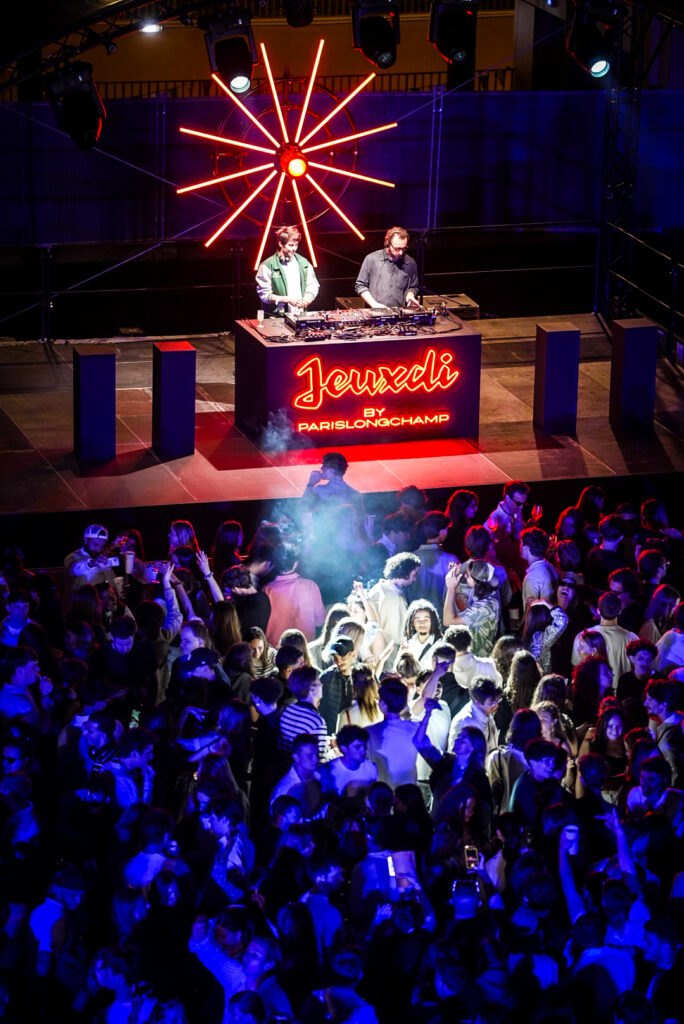
At ParisLongchamp Racecourse, France Galop’s “JeuXdi by ParisLongchamp” series has transformed ordinary Thursday race meetings into large-scale social events aimed directly at younger consumers — many of whom had never previously engaged with horse racing.
The concept is deceptively simple. Racing remains central, but it is packaged alongside DJs, food gardens, fashion culture, social media-friendly presentation, open-air nightlife and beginner-friendly betting experiences. The result has been a dramatic reversal of attendance trends at a venue that, like many racecourses globally, faced the challenge of an aging customer base.
Launched in 2018 following the redevelopment of ParisLongchamp, JeuXdi was designed as an “afterwork” concept targeting young adults rather than traditional racing regulars. France Galop deliberately shifted away from presenting racing solely as a betting product and repositioned it as an entertainment experience first, with racing acting as the centerpiece rather than the entire offering.
The numbers quickly became impossible to ignore.
By the second season in 2019, the Thursday evening events were averaging approximately 8,500 spectators per meeting, with attendance increasing by 134% compared to the previous year. France Galop reported that 72% of attendees had never previously placed a horse racing bet, while 61% wagered during the event itself. Betting turnover at ParisLongchamp on those Thursdays rose sharply year-on-year.
Perhaps more importantly for racing’s long-term survival, surveys conducted among attendees suggested the concept was converting curiosity into repeat interest. France Galop stated that 41% of first-time bettors wanted to continue betting in future, while 71% expressed interest in attending other racing events.
The demographic shift was equally significant. The average age at early editions reportedly hovered around 26 — a remarkable figure for a sport globally struggling to attract younger audiences.
Rather than expecting young consumers to adapt to racing culture, JeuXdi adapted racing culture to modern entertainment habits. Music, nightlife aesthetics, social interaction and digital visibility became part of the racecourse product.
By 2024, the concept had evolved into one of Paris’ most sought-after summer attractions, with multiple dates reportedly selling out and crowds exceeding 10,000 spectators.
But France Galop pushed the strategy even further in 2026 by making a bold programming decision that many racing jurisdictions would likely have avoided.
Instead of reserving elite racing exclusively for traditional weekend slots, France Galop integrated Group 1 racing directly into the JeuXdi concept itself. The May 21, 2026 Thursday evening fixture at ParisLongchamp featured two Group 1 contests — the Prix d’Ispahan and the Prix Vicomtesse Vigier — embedded into the afterwork entertainment schedule.
That move was deliberate rather than symbolic.
France Galop recognized that if younger audiences were attending the venue for atmosphere and entertainment, then elite racing needed to be placed directly in front of them rather than hidden away in traditional programming structures designed for existing racing fans.
The philosophy behind JeuXdi is particularly relevant for South African racing.
South Africa still produces world-class horses, jockeys and racing moments, yet the sport continues to struggle with the perception that racecourses are primarily spaces for older punters and established industry participants. Outside of major racedays such as the Durban July, regular attendance at many meetings remains modest.
Part of the challenge lies in how racing continues to market itself.
Too often, the industry speaks almost exclusively to existing racing audiences using technical language, betting-focused promotion and traditional structures that assume public interest already exists. But modern consumers — particularly younger audiences — no longer choose entertainment based purely on sporting quality. They choose experiences, atmosphere, accessibility and social relevance.
JeuXdi understood that shift.
France Galop did not abandon racing tradition. It modernized the presentation of racing without compromising the sport itself. The races still mattered. The betting still mattered. But the customer experience around the product became equally important.
Another crucial lesson from ParisLongchamp is that successful sports marketing starts with understanding the actual demographic base surrounding the venue.
The cultural makeup of a city matters. The social habits of the local population matter. Entertainment preferences matter. Racing cannot market itself effectively if it ignores who lives around the racecourse.
That is where Durban racing, particularly at Greyville, arguably missed a major opportunity over the past two decades. This hasn't changed in recent time either with marketing faux pa's repeated over again and numerous costly trial and effort efforts missing the mark.
Durban has one of the largest Indian populations a huge position for the sport, with Indian culture deeply embedded across the city’s food, music, fashion, business and sporting identity. Historically, Indian racegoers and punters formed a significant part of the backbone of KwaZulu-Natal racing culture. Generations grew up around betting shops, raceday traditions and major social events linked to the sport.
But while that older generation maintained ties to racing, the industry largely failed to evolve its marketing toward younger Indians in Durban — the very demographic that represented the next wave of potential racegoers and punters.
Instead of building campaigns that reflected the surrounding community and its cultural identity, much of racing’s modern marketing became generic, corporate and disconnected from the population base around Greyville itself.That base will then attract other groups to the sport seeing the vibe and atmos it can create. However, it starts with getting people onto the course. Use the currently engaged Indian population to do that.
There was little sustained effort to make racing culturally aspirational for younger Indian audiences in the way ParisLongchamp repositioned racing for Parisian youth culture.
That does not necessarily mean ethnic-specific marketing in a narrow sense. It means understanding how communities consume entertainment, what social environments attract them, what music they engage with, how families socialize, what younger audiences share online and what makes an event feel culturally relevant within that city.
For long periods, Durban racing appeared to assume the Indian market would simply remain attached to the sport through historical loyalty alone.
But generational loyalty weakens when it is not actively renewed.
Younger audiences today are shaped by digital culture, nightlife trends, influencers, food experiences and social identity far more than by inherited sporting habits. If racing does not place itself inside those environments, other entertainment industries inevitably will.
The irony is that Greyville arguably possessed the foundations to become one of the strongest lifestyle racing venues in the Southern Hemisphere.
Few racecourses sit so close to a large urban population with such strong social and cultural cohesion. Few possess Durban’s climate, nightlife potential and event culture. Yet much of racing’s promotional energy remained locked into traditional betting-focused messaging rather than broader audience-building.
France Galop recognized that survival depended on building new emotional connections with audiences before trying to convert them into bettors.
That may be the biggest lesson South African racing needs to absorb.
The future customer is not automatically arriving because their parents or grandparents attended races. Modern racing must actively compete for attention — and that competition starts by understanding the people living around the racecourse itself.
ParisLongchamp’s Thursday experiment showed that racing does not necessarily need to reinvent the sport itself.
But it may need to reinvent how the public experiences it.
Image of ParisLongchamp, France Galop
|