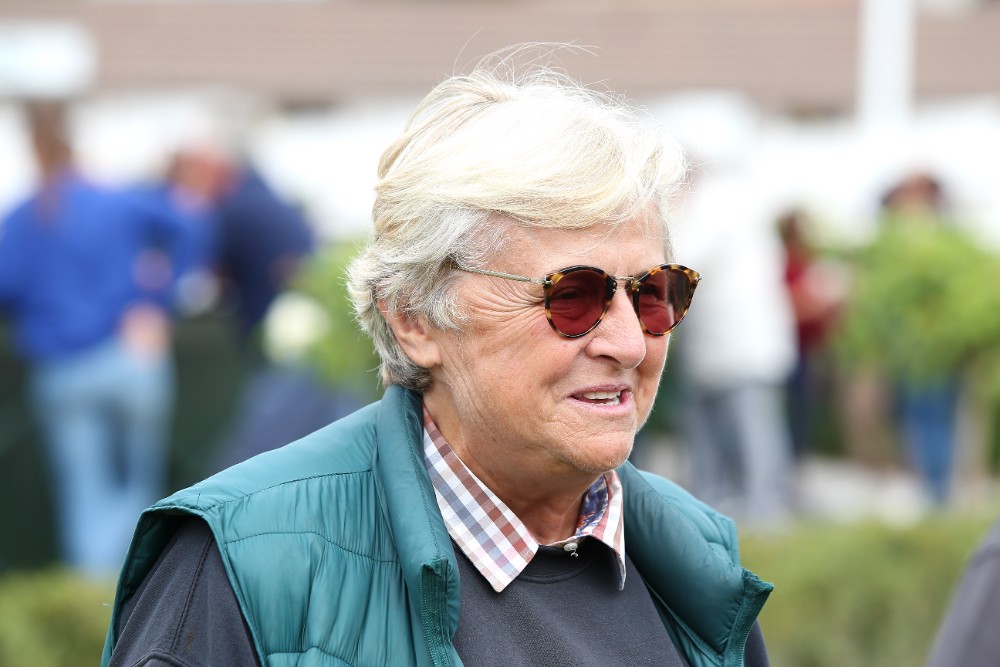
Few figures in European racing carry the authority and historical weight of Christiane Head. Nearly four decades after winning the Prix du Jockey Club as a trainer with Bering, the woman known throughout the sport as “Criquette” now approaches the French Classic from a different perspective. Pearled Majesty gives her the opportunity to secure the race for the first time as an owner, adding another chapter to a career already defined by barrier-breaking achievement and elite-level success.
Head’s place in racing history was secured long ago. In 1979, she became the first woman to win the Prix de l’Arc de Triomphe when Three Troikas defeated the colts at Longchamp. Over the following decades, she built one of the most accomplished training careers in French racing, collecting more than 128 Group 1 victories and later developing champions such as dual Arc winner Trêve.
The Jockey Club remains one of the defining races of the French calendar and also carries personal significance for the Head family. Her 1986 victory with Bering came in the colours of her mother, Ghislaine Head. Now, 40 years later, Pearled Majesty represents a project shaped almost entirely within the family circle.
Head explained that the colt’s story began years earlier through the purchase of his dam alongside her brother Freddy Head. “At the time, with Freddy, we bought Pearled Majesty’s dam,” she said, outlining how the family later retained close ties to the bloodline even after the dispersal of Haras du Quesnay.
What followed was a sequence of decisions that ultimately brought Pearled Majesty back into the family fold. “It was a mating that we ourselves had decided upon,” Head said. “Later, I bought back the foal, a filly I liked very much because it is a family I am deeply attached to.”
The eventual purchase of Pearled Majesty himself came after a recommendation from her grandson, Fernando Laffon, while he was in England. Head said both Laffon and trainer Mauricio Delcher-Sanchez immediately shared the same impression of the colt, leading to the ownership partnership that now heads toward Chantilly.
Significantly, Head has remained careful not to interfere in the training operation despite her own vast experience. Since retiring from training in 2018, she has deliberately taken a restrained role as an owner.
“I know too well what this profession represents to interfere unnecessarily,” she said. “A trainer’s life is extremely complicated: you have to be there every day, understand your horses, cope with the pressure of results and sometimes also with the pressure from owners.”
That perspective reflects the realities of modern training from someone who spent decades operating at the highest level. Head made it clear that her trust in Delcher-Sanchez is absolute.
“Mauricio knows this horse perfectly,” she said. “The colt was not easy at first, he was somewhat immature, and Mauricio has done a fantastic job with him.”
Head also dismissed any concern over race conditions or tactical variables, maintaining the philosophy that defined much of her training career. “Personally, I have never liked looking for excuses,” she said. “When I was a trainer, neither the draw nor the ground ever frightened me. If a horse is good enough, he can win under any conditions.”
Her reference to winning the Arc from stall 22 underlined a mindset that has long separated elite horsemen from the rest. Equally notable was her defence of jockey autonomy. “I also believe jockeys should be allowed to ride horses according to their own instincts,” she said. “They are the ones on the horse’s back and the best placed to feel what needs to be done during the race.”
While Head acknowledged that success in the Jockey Club as an owner would hold enormous emotional value, she framed the race in broader terms. “The most important thing is that the horse comes back safely from his race,” she said. “Everything that happens on Sunday will be a bonus.”
Retirement has altered the rhythm of her life, with time now divided between France, Switzerland and the Bahamas alongside children, grandchildren and great-grandchildren. Yet the connection to racing remains unchanged.
“Racing remains a tremendous passion and it will always be part of my life,” Head said.
For a sport built on continuity between generations, Pearled Majesty arrives at the Jockey Club carrying far more than Classic ambition. He represents the enduring influence of one of racing’s most important families and the lasting competitive drive of one of the sport’s defining figures.
|