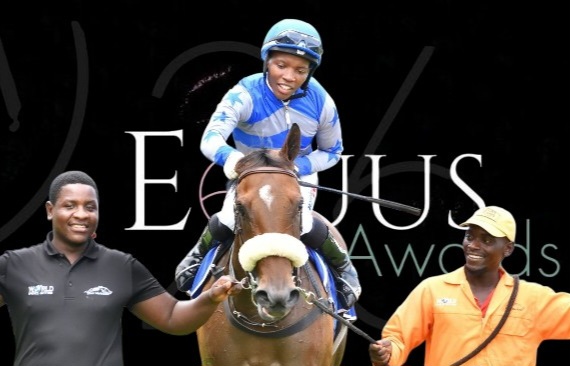
The Equus Media Awards were introduced as a supposed celebration of excellence in South African racing journalism. In reality, they have increasingly come to represent something very different: a closed-loop system of recognition inside an industry where genuine independence is rare, criticism is unwelcome, and access often matters more than accountability.
That may sound harsh, but the evidence sits in plain sight. South African racing media is no longer a landscape filled with robust, competing independent voices. Much of it is directly tied — financially, commercially, or structurally — to one of the country’s racing operators. In such an environment, the concept of truly independent judging becomes deeply questionable. Over the years, many award recipients have either worked for, collaborated with, or maintained close relationships with the same organizations that dominate the industry narrative.
Whether intentional or not, it creates the perception that the awards function less as a recognition of fearless journalism and more as an internal industry pat on the back.
The deeper problem is what this environment discourages.
Journalism, at its core, is not public relations. It is not meant to exist solely to protect powerful structures or promote comfortable narratives. Its role is to question, investigate, challenge, and expose uncomfortable truths where necessary. Yet within South African racing, those who choose to critically examine the industry often find themselves isolated rather than respected.
Anyone who has publicly raised concerns around transformation failures, transparency issues, nepotism, favoritism, race programming, governance problems, or the lack of accountability within racing administration understands this reality well. Critical reporting does not typically lead to constructive engagement. Instead, it often results in strained relationships, exclusion from certain circles, and quiet campaigns to marginalize dissenting voices.
The irony is impossible to ignore. South African racing has spent years battling financial instability, declining participation, shrinking audiences, and repeated structural crises. Time and again, the industry has been rescued by new investors, funding models, or corporate interventions. Yet despite these recurring warning signs, many of the same personalities and power structures continue to recycle themselves through each new chapter, often without serious scrutiny or accountability.
Against that backdrop, the Equus Media Awards begin to feel disconnected from the realities facing the sport.
Awards for journalism should reward courage, investigation, originality, and the willingness to challenge entrenched systems when necessary. Instead, the current structure often appears to reward safe participation within an overwhelmingly controlled media ecosystem. When criticism becomes professionally risky, genuine journalism suffers. And when journalism suffers, industries lose one of the few mechanisms capable of forcing improvement.
This is not simply a racing problem. It is a broader truth about media everywhere.
Former U.S. Secretary of State Madeleine Albright once described a free press as “the heartbeat of democracy” because of its ability to hold leaders accountable. Likewise, Nobel Peace Prize laureate Aung San Suu Kyi said that an independent press serves as “guardian of the public interest.”
Those principles apply just as strongly to sport as they do to politics.
No industry can sustainably grow while silencing or discouraging independent scrutiny. Healthy industries do not fear criticism; they learn from it. They understand that transparency strengthens credibility, while controlled narratives eventually weaken public trust.
South African racing does not need media awards designed to reinforce internal relationships. It needs an environment where independent journalism can exist without fear of exclusion, retaliation, or professional isolation. Until that changes, the Equus Media Awards risk remaining what many critics already see them as: an exercise in self-congratulation rather than a meaningful celebration of journalistic excellence.
|